
Stromboli – A Trekking Guide to Active Volcanoes
Introduction
As you continue, you will focus on ascent techniques, the pace to maintain and the volcano’s signals, learning to recognise fissures, emissions and safe viewpoints.
Remember to follow authorised guides, wear suitable footwear, carry water and a light, and keep to marked routes to minimise risks and help preserve the environment.
Technical Preparation and Access Requirements
Before tackling the slopes, assess your experience on unstable terrain: you will need to be able to walk on volcanic sand, fractured rock and steep gradients, as well as manage rapid changes in the weather. Plan your route with realistic timings and consider being accompanied by an authorised guide if you are not experienced.
Essential equipment and safety gear
Make sure you bring a helmet, dust mask or bandana, sturdy trekking boots, poles, a windproof jacket and a head torch; add a first-aid kit, spare torch and external battery pack. Check that your rucksack is not too heavy and that you know how to use every item before setting off.
Local regulations and permits for high-altitude hiking
Remember that access to summit areas may be regulated: an authorised guide is often mandatory, time slots may apply and unmarked routes are forbidden. You must respect bans on approaching the craters and follow the signs for reasons of safety and environmental protection.
Check the procedures with the Municipality, the Harbour Office or the local tourist office: book any permits required, confirm times and costs, provide the personal details requested and payment methods; keep receipts and follow instructions for the meeting point and attendance check before the ascent.
Ascent Routes: Towards the Heart of the Volcano
Climbing along the main paths, you will reach the summit cone; the final stretch is exposed and requires experience or accompaniment, so you can book qualified guides through Stromboli Adventures: Stromboli excursions with guides for safety and geological insights.
The classic route to the summit craters
On the classic route to the summit craters, you will cross steep scree slopes and short plateaux: allow 2–3 hours for the ascent, bring a helmet, head torch and technical footwear; your guide will identify safe observation points during Strombolian explosions.
Alternative trails and low-altitude viewpoints
By choosing alternative low-altitude trails, you will find less exposed viewpoints from which to observe volcanic activity from a greater distance; these routes are ideal if you prefer photography, birdwatching or less demanding hikes, while always maintaining a safe distance.
Also consult up-to-date maps and local signs before setting off: you will find marked routes that avoid unstable areas, sunset viewpoints and photography spots; bring water and a windproof layer, and respect restrictions for your own safety.
Geology and Dynamics of Strombolian Activity
A lava-rich, fractured subsurface controls the ascent of gases; you will notice how the system of conduits and magma chambers generates intermittent eruptions, with low-viscosity basaltic magma favouring short but repeated explosions.
Thanks to the crater’s geometry and varying gas pressures, you can interpret temporal patterns: the frequency of explosions reflects the balance between magma supply and degassing, influencing the level of hazard during excursions.
Characteristics of persistent explosions
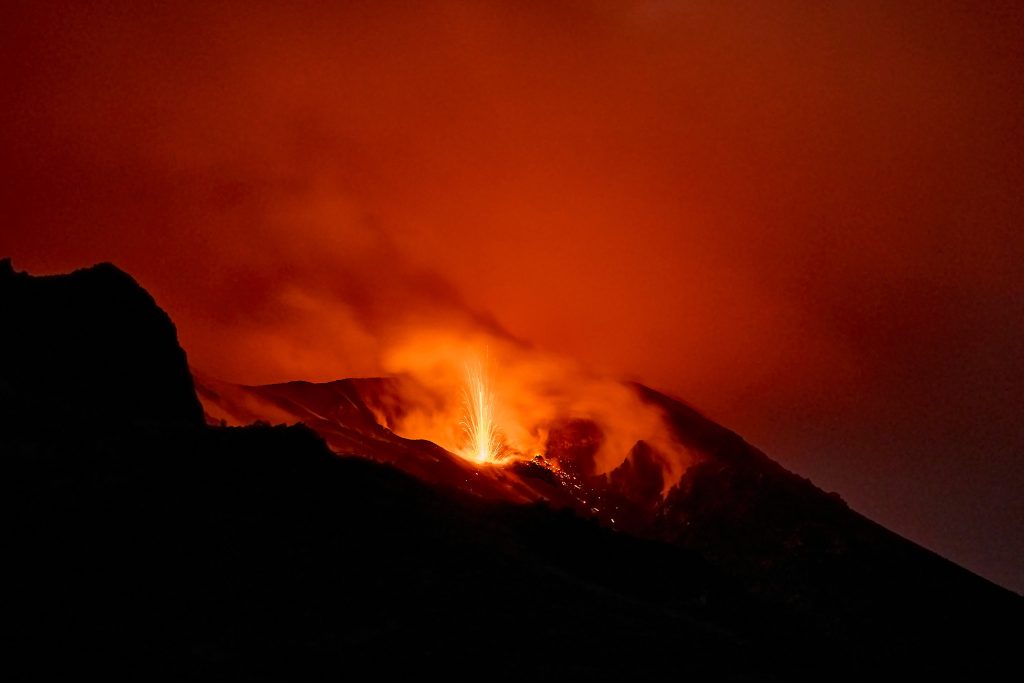
By observing persistent explosions, you will distinguish regular sequences of lapilli and incandescent bombs thrown into the air, interspersed with pauses of a few seconds or minutes: the defining feature of Strombolian activity.
During more intense phases, you will need to assess the height of the jets and the dispersal of pyroclasts: these parameters determine the areas to avoid and the best places from which to watch safely.
Geophysical monitoring and volcanic alert levels
Through seismic and infrasound networks and measurements of gas emissions, you can recognise warning signs such as increased seismicity or SO2 peaks that precede changes in activity.
In addition, thermal monitoring and ground-deformation measurements provide complementary data: experts combine them to define alert levels used to regulate access and trekking routes.
Remember to consult official volcanological bulletins before and during the excursion; you must respect boundaries, follow the authorities’ instructions and abandon routes if alert levels rise.
The Night Trekking Experience
During the night route, move carefully, following your guide and the light signals; the uneven terrain and volcanic activity require constant concentration and respect for instructions in order to avoid dangerous areas.
Listen to the group instructions and keep the agreed distance: reduced visibility and the microclimate of the ridge can be surprising, so caution is essential if you are to enjoy the experience safely.
Managing the ascent and descent at night
Climb at a steady pace and use adjustable lights so as not to dazzle others; regularly check your bearings and stop only at the points indicated by your guide for checks and breaks.
Remember to hydrate, dress in layers and keep spare batteries with you: this reduces the risk of hypothermia, fatigue and lighting-related problems during the descent.
Watching the glow on the Sciara del Fuoco
Watch the glow from the permitted distance and follow the indicated viewpoints: the contrast between the incandescent explosions and the sea is spectacular, but safety remains the priority.
Admire the jets of pyroclastic material while respecting the restrictions in place; stay calm and do not approach prohibited areas, even when the spectacle appears close.
Practical details: take photographs with long exposures and a tripod, use high ISO settings with care and respect the prohibited areas marked by the volcanological authority to protect yourself and others.
Travel Logistics and Organisation
Plan your trip by choosing dates based on observation windows and authorised guided excursions; book a local guide because access to active areas is regulated and subject to scheduled departures. Check insurance, equipment and weather conditions before leaving.
Book ferries and hydrofoils in advance to avoid difficulties in high season; coordinate transfers from Milazzo or Messina and allow buffer time for possible cancellations. Bring cash, sturdy trekking shoes and a small personal medical kit.
Sea connections and getting around the island
Bear in mind that sea connections depend on the conditions: check hydrofoil and ferry timetables daily and allow for cancellations. On the island, you will mainly get around on foot; for Ginostra, use sea shuttles and be prepared to climb steep flights of steps.
Staying between the villages of Stromboli and Ginostra
Choose Stromboli if you want to be close to the trail and evening services, or Ginostra for peace and starry skies; book well in advance in high season and respect local rules for returning at night after the excursion.
Bear in mind that Ginostra offers limited services: few shops, intermittent electricity and supplies brought by boat; bring medicines, torches and power banks. If you prefer comfort, stay in Stromboli and plan Ginostra as a short stop or a simple overnight stay.
Respect for the Environment and Aeolian Biodiversity
Remember that every step affects the ecosystem: avoid leaving the paths, do not abandon waste and respect repopulation areas in order to conserve the rich biodiversity of the Aeolian Islands.
Flora and fauna of the volcanic slopes
On the slopes, pioneer flora and endemic species adapted to lava soils predominate; observe wildlife from a distance, do not disturb nests and do not collect plants or natural samples.
Code of conduct for sustainable tourism
When you visit, follow the signs, respect park regulations and entrust excursions to authorised guides for your safety and to minimise environmental impact.
In addition, take only your own waste with you, use reusable containers, report harmful behaviour and favour certified local operators to support the protection and economy of the area.
Stromboli – A Trekking Guide to Active Volcanoes
When trekking on Stromboli, you need to prepare for variable conditions: steep paths, ash and occasional pyroclastic emissions. Always rely on authorised guides, check volcanic bulletins and wear a helmet, sturdy boots and a torch; respect prohibited areas and plan your excursion at sunset to observe the activity safely.
In conclusion, trekking on the volcano is an extraordinary but demanding experience: assess your physical fitness, follow the authorities’ instructions and choose only guided excursions to minimise risks and enjoy this natural spectacle in safety.